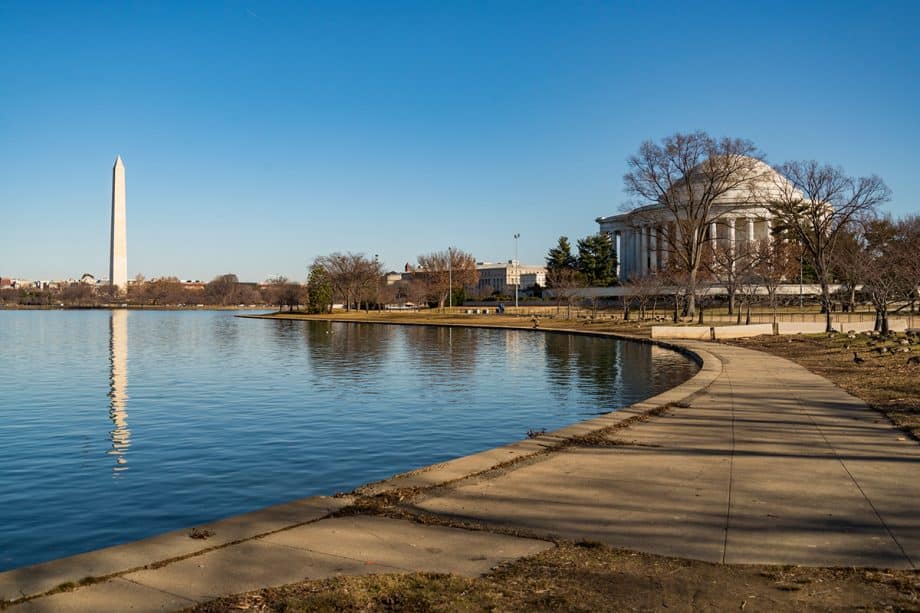
The Tidal Basin in Washington, DC is one of the most beloved landmarks in the United States. Each spring, the famous cherry blossoms draw visitors from around the world who come to see the trees surrounding the water burst into color. Today, an important restoration effort is underway to protect this historic landscape for the future. The Tidal Basin Seawall Rehabilitation Project is helping stabilize the shoreline while preparing the area for a new generation of cherry trees.
This large-scale infrastructure initiative began after engineers identified significant deterioration in the aging seawall that surrounds the basin. Over time, flooding, erosion, and soil instability began threatening walkways, monuments, and the health of the iconic trees themselves. The Tidal Basin Seawall Rehabilitation Project addresses these issues while also introducing newly donated cherry trees that will continue the long standing cultural exchange between the United States and Japan.
Why the Tidal Basin Seawall Rehabilitation Project Was Needed
The seawall surrounding the Tidal Basin was originally built more than a century ago. For decades it protected the shoreline from tidal forces and seasonal flooding. However, time and environmental stress gradually weakened the structure.
Sections of the wall began sinking, walkways became uneven, and soil erosion started affecting nearby landscaping. Floodwater frequently pooled around the base of trees, damaging root systems and increasing the risk of tree decline. Without intervention, the structural issues would have continued worsening and potentially endangered the surrounding monuments and public spaces.
The Tidal Basin Seawall Rehabilitation Project was created to rebuild and reinforce this aging infrastructure. The restoration includes constructing a stronger seawall, stabilizing the shoreline, and redesigning parts of the landscape so that the basin can better withstand changing environmental conditions.
Just as importantly, the project ensures that the cherry blossom trees that define the area will have a healthier environment to grow for decades to come.
A New Generation of Cherry Trees Arrives
As part of the restoration effort, several trees were removed in 2024 when construction on the seawall began. While this was a necessary step to protect the site and allow engineers to rebuild the shoreline, it also created an opportunity to welcome a new generation of trees to the National Mall.
Recently, a collection of young saplings arrived to replace those removed during construction. Many of these trees are varieties of cherry blossoms and were donated by the nation of Japan. Their arrival represents the latest chapter in a remarkable cultural relationship that began more than a century ago.
In 1912, Japan gifted thousands of cherry trees to the United States as a symbol of friendship between the two nations. Those trees transformed the Tidal Basin into the iconic landscape visitors recognize today. The newly donated saplings continue that tradition, reinforcing the cultural bond and ensuring that the famous blossoms remain part of the National Mall experience.
Over the coming months, these young trees will be carefully planted throughout the basin. Experts expect them to thrive in the improved conditions created by the rehabilitation project and eventually contribute their own beauty to the landscape.
How the Tidal Basin Seawall Rehabilitation Project Supports Tree Health
One of the key goals of the Tidal Basin Seawall Rehabilitation Project is improving the long term health of the cherry trees. The previous seawall design contributed to several environmental challenges that affected the trees over time.
Flooding often caused water to collect around the roots of the trees, which can lead to root rot and structural weakness. Soil compaction and erosion also limited the space available for roots to grow and absorb nutrients.
The new design addresses these issues by improving drainage and providing larger planting areas for the trees. These changes allow the root systems to expand more naturally and reduce the risk of long term damage caused by standing water.
Engineers and landscape experts worked together to ensure that the rehabilitation supports both structural stability and environmental sustainability. The improved shoreline and landscaping will create better conditions not only for the new trees being planted but also for the existing cherry blossoms that remain.
What Visitors May Notice During the Project
Large scale restoration projects like this require time and careful coordination. As work continues, visitors may notice construction areas or temporary changes to walking paths around the Tidal Basin.
The project is being completed in phases to minimize disruption while allowing crews to safely rebuild sections of the seawall. Some areas may be temporarily closed while work is underway, but the National Mall remains open and accessible.
Visitors will also begin to see newly planted saplings appear along portions of the basin. While these trees are still young, they represent the future of the iconic cherry blossom display that has become synonymous with Washington, DC.
Watching these trees grow over the coming years will be a reminder of the ongoing efforts to preserve the beauty of the National Mall.
Preserving the Legacy of the Cherry Blossoms
The cherry blossoms surrounding the Tidal Basin are more than just beautiful trees. They represent history, international friendship, and one of the most celebrated traditions in the United States. Each spring, the National Cherry Blossom Festival attracts millions of people who gather to admire the blooms and celebrate this cultural heritage.
The Tidal Basin Seawall Rehabilitation Project ensures that this tradition can continue. By rebuilding the seawall and improving the surrounding landscape, the project protects both the infrastructure and the natural environment that make the area so special.
The arrival of new cherry tree saplings highlights how restoration efforts can also create opportunities for renewal. These young trees will grow alongside the historic blossoms, continuing a story that began with Japan’s original gift more than 100 years ago.
As the project progresses, updates and planting milestones will continue to mark the next chapter in preserving this iconic landscape.
Frequently Asked Questions About the Tidal Basin Seawall Rehabilitation Project
Why were some cherry trees removed during the project?
Some trees needed to be removed in 2024 to allow construction crews to rebuild the seawall and stabilize the shoreline. These removals were necessary to ensure the long term safety and health of the surrounding landscape.
Where did the new cherry tree saplings come from?
Many of the new saplings were donated by the nation of Japan. The donation continues the historic cultural exchange that began with Japan’s original gift of cherry blossom trees to the United States in 1912.
At MD Smiles, we believe in sharing helpful insights that keep our community informed about meaningful developments in Washington, DC and beyond. Our team is dedicated to education, awareness, and connecting people with the stories that shape our shared spaces. Contact us today to learn more and schedule an appointment.